Thinking about Naked pet insurance? Discover how cover works, what’s included, and how to pick the best plan for your pet.
With Naked's pet cover, choosing the right plan comes down to three things: what you want covered, how much cover you want available for the year, and what excess you're comfortable paying when you claim.
We've built our pet cover so you can adjust each of those, rather than picking from a long list of pre-built plans. There are three plans to start with, and you can shape the annual limit and excess within each one to suit your pocket and give you peace of mind.
This guide walks through how each part works, so you can put together a plan that works for you.
The quick version
If you just want a starting point:
- Mainly worried about big, unexpected vet bills from accidents → Basic might be all you need
- Want cover for accidents and illness → Nice could be a better fit
- Want most vet visits included, not just the unexpected ones → Take a look at Plus
The rest of this guide goes into what each plan covers, and how to pick a limit and excess that suit you.
How does Naked’s pet insurance plans work
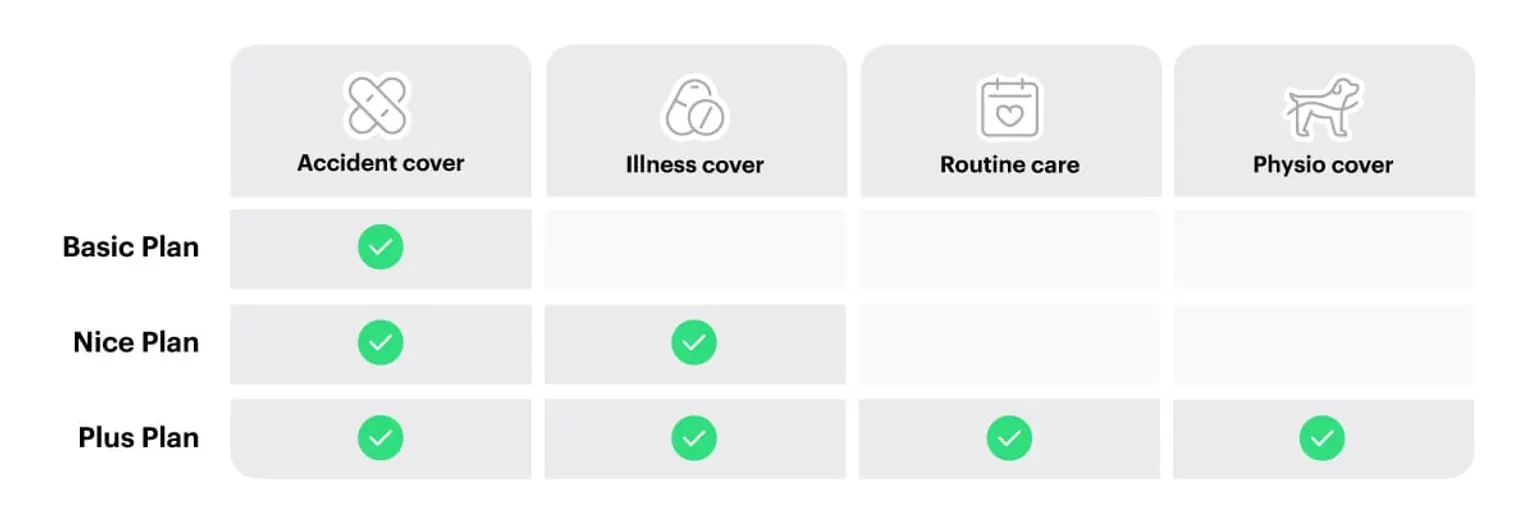
Each plan builds on the one before it. As you move up, more types of vet costs are included, and your monthly premium usually goes up too.
Basic : accidents only
Basic helps with unexpected injuries, like a broken bone, a bite wound, or your dog swallowing something they shouldn't.
It’s the simplest option, and usually the most affordable. A good fit if you’re mainly worried about the kind of bills you can’t plan for, and you’re okay covering illness or routine care yourself.
Nice: accidents and illness
Nice covers everything Basic does, plus illnesses diagnosed by a vet.
It sits in the middle. Worth considering if you want broader cover than accidents alone, but you don't mind paying out of pocket for predictable things like check-ups, vaccinations, or tick and flea treatment.
Plus: accidents, illness, routine care and physio
Plus is the most comprehensive option. It covers the unexpected, plus the everyday care you choose to do, like vaccinations and check-ups, and rehab like physio after surgery or injury.
Because it includes the most, it's usually the most expensive plan. It tends to suit pet parents who’d rather have a more predictable monthly spend that they can budget for, with fewer out-of-pocket vet bills throughout the year.
What's actually covered
Accidents
An accident is a sudden, unexpected event that happens after your cover starts and causes a physical injury that needs urgent vet care.
Think:
- being hit by a car
- falls
- bites or stings
- burns
- swallowing something they shouldn’t
For a valid claim, cover can include vet consultations and follow-ups, diagnostics like x-rays or bloodwork, surgery, hospitalisation, and medication.
Illness
An illness is an unexpected sickness or condition diagnosed by any vet.
For a valid illness claim, cover can include the same things as an accident claim: vet consultations and follow-ups, diagnostics, surgery, hospitalisation, and medication.
Routine care (Plus only)
Routine care covers the preventative treatments you choose to have done at any registered vet practice or clinic, like:
- vaccinations
- deworming
- tick and flea treatment
- sterilisation
- routine blood tests
- dental check-ups and cleaning
Cover applies up to the limit shown in your cover summary.
Physio (Plus only)
Physio covers rehabilitation prescribed by any registered vet and carried out by a qualified animal physiotherapist, usually after an accident, surgery, or illness.
That can include physiotherapy, hydrotherapy, core strengthening, therapeutic massage, and other hands-on or exercise-based rehab. Cover applies up to the limit shown in your cover summary.
How do you choose your annual limit?
Your annual limit is the maximum your cover will pay out over a policy year. Just below that in your app, you’ll see your per-claim limit, which is the most we’ll pay for a single claim.
Instead of locking you into preset bundles, you can choose a limit that works for you.
- A higher limit gives you more room for bigger or multiple claims, like surgery or ongoing treatment, but comes with a higher monthly premium
- A lower limit keeps your premium down, but means there’s less cover available if claims add up over the year
Here’s an example of how it works in practice
Let’s say your annual limit is R25,000, your per-claim limit is R15,000, and you've picked a 20% excess with a R1,500 minimum.
Claim 1: a R10,000 vet bill
Your excess is 20% of R10,000, which is R2,000. We pay the rest: R8,000. That leaves R17,000 of your annual limit for the rest of the year.
Claim 2: a R20,000 vet bill, a few months later
Your excess is 20% of R20,000, which is R4,000. After that, R16,000 is left of the bill. But your per-claim limit is R15,000, so the most we can pay on this claim is R15,000. Now the remainder of your annual limit goes down from R17,000 to R2,000. You'd cover the rest of the bill.
How do you decide on your excess?
Your excess is what you pay towards a claim. With Naked, it works as a percentage of your vet bill, with a minimum amount that always applies.
You pick the percentage: 10%, 20%, or 30%. And you can adjust the minimum to suit your premium and your pocket.
- A higher percentage or higher minimum lowers your monthly premium, but means more out of pocket when you claim
- A lower percentage or lower minimum increases your premium, but less to pay at claim stage
The minimum makes sure your excess doesn't drop too low on smaller bills. Say you pick 20% with a R1,500 minimum. On a R5,000 vet bill, 20% would be R1,000, but because that's below your minimum, you'd pay R1,500. On a R10,000 bill, 20% is R2,000, which is above the minimum, so that's what you'd pay.
If you're comfortable covering smaller vet visits yourself, like a consultation and medication (often around R1,000 to R2,000), a higher percentage or minimum can make sense. Your premium is lower, and your cover focuses on bigger costs like surgery or hospitalisation.
If you'd rather have cover kick in sooner, a lower percentage or minimum means less to pay out of pocket when you claim, but a higher monthly premium.
Two things worth knowing: Your pet doesn't need to be admitted to hospital for a claim to be valid. Eligible vet consults are included on any plan. Also, you can go to any vet of your choice
Putting it together
Choosing pet cover with us comes down to three steps:
- Pick the plan that matches what you want covered: Basic, Nice, or Plus.
- Choose an annual limit that gives you enough cover for the year
- Choose an excess that balances your monthly premium with what you’d pay when you claim
There isn’t one “right” setup. It depends on how you balance monthly cost with how much cover you’d want when something happens. You can see all three pet insurance plans side by side to compare what each one includes.
Our app lets you adjust your limit and excess so you can see how each change affects your premium before you buy or renew. And because you can update them at your policy anniversary, your first choice doesn’t have to be your final one.
FAQs
What's the difference between Basic, Nice, and Plus?
Basic covers accidents. Nice covers accidents and illness. Plus covers accidents, illness, routine care, and physio. As you move up, more types of vet costs are included, and your monthly premium usually goes up too.
Can I switch plans later?
Yes. You can change your plan, annual limit, and excess at your policy anniversary, so your first choice doesn't have to be permanent.
Do I have to take my pet to a specific vet to have cover?
No. You can go to any registered vet practice or clinic of your choice.
What's an excess?
Your excess is what you pay towards a claim. With Naked, it works as a percentage of your vet bill (10%, 20%, or 30%) with a minimum amount that always applies. A higher percentage or minimum means a lower monthly premium and more out of pocket when you claim. A lower percentage or minimum means a higher premium and less to pay at claim stage.
What's an annual limit?
Your annual limit is the most your cover can pay out in a policy year. A higher limit gives you more room for big bills but costs more each month. A lower limit costs less but leaves you with less cover available if claims add up.
Does my pet need to be hospitalised for a claim to be paid?
No. Eligible vet consults are included on any plan, so your pet doesn't need to be admitted to hospital for a valid claim to be paid.
Is routine care worth it?
It depends on your pet's life stage and how often you visit the vet. Young pets often need vaccinations, check-ups, and sterilisation. Older pets may need more regular preventative care. If you tend to skip routine treatments to save money, having them included on Plus can make them easier to keep up with.
What counts as an accident?
An accident is a sudden, unexpected event that happens after your cover starts and causes a physical injury that needs urgent vet care. Things like being hit by a car, falling, bites or stings, swallowing a foreign object, or fractured bones.
What counts as an illness?
An illness is an unexpected sickness, disease, or decline in your pet's health that's diagnosed by a vet.
How do the limit and excess work together when I claim?
We work out your excess first (a percentage of the bill, or your minimum, whichever is higher), then pay the rest up to your per-claim limit and your annual limit. There are worked examples in the "How it works in practice" section above.
Can I see how my premium changes before I buy?
Yes! Our website and app both let you adjust your plan, limit, and excess so you can see how each change affects your premium before you buy or renew.
Ready to cover your furry friend?
Get a pet insurance quote on the Naked website or app. It takes just a few minutes.